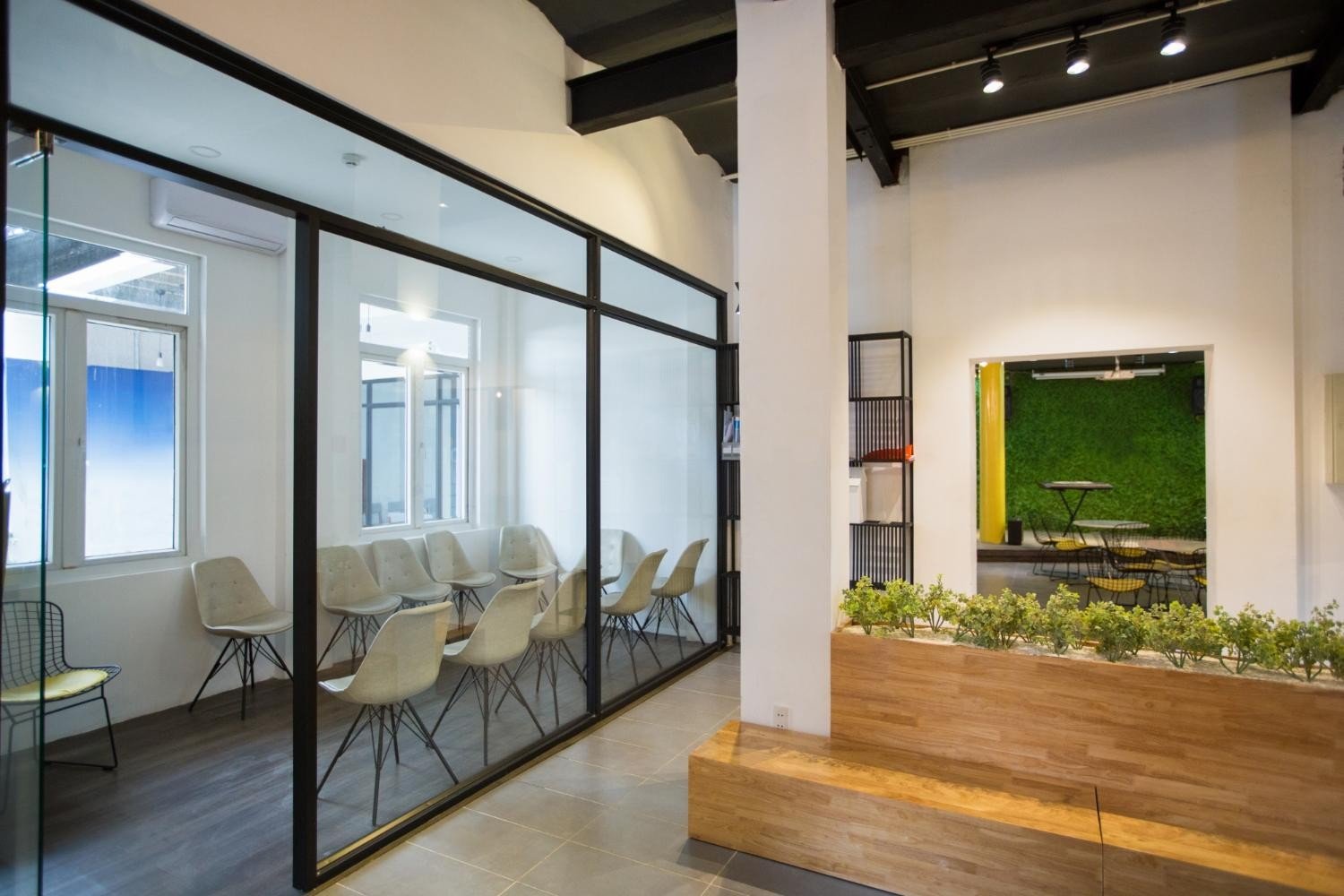
Glass is widely used in commercial spaces because it creates an open appearance and allows natural light to travel through a building. Offices with glass partitions can feel brighter and more spacious, while storefront windows help businesses display their interiors and products. Conference rooms with glass walls can also create a modern workplace environment.
The downside is that clear glass does not always provide enough privacy. Employees may feel exposed when working in meeting rooms, confidential discussions can be visible from outside, and storefront interiors may be too easy to see from busy walkways. Covering the glass completely with blinds or curtains can solve the privacy problem, but it can also reduce natural light and change the appearance of the space.
Commercial privacy film offers another option. It can be applied directly to existing glass to create varying levels of visual privacy while maintaining many of the benefits associated with glass. Depending on the selected style, privacy film can obscure specific areas, cover an entire panel, or incorporate decorative patterns that complement the business environment.
Why Privacy Matters in Commercial Spaces
Privacy affects more than confidential conversations. It can influence how comfortable employees feel, how meetings are conducted, and how customers perceive a business.
An employee working in a glass enclosed office may feel distracted when people constantly pass by and look inside. A conference room may need privacy during discussions involving company finances, employee matters, contracts, or client information.
Retail businesses face a slightly different concern. Storefront glass is useful for visibility, but certain areas of the interior may not need to be completely exposed.
The goal is often to create a balance between openness and visual separation.
Conference Rooms Need Controlled Visibility
Conference rooms are one of the most common areas where privacy becomes a concern. Glass walls provide visibility and natural light, but they can make meetings feel exposed.
A privacy film can be applied to the lower section of a glass wall while leaving the upper portion clear. This approach allows light to pass through while limiting visibility of people seated around the table.
For businesses that require greater privacy, the film can cover a larger portion of the glass.
Conference rooms may also benefit from decorative patterns or branded elements. Frosted designs can provide privacy while adding visual interest to an otherwise plain glass partition.
Protecting Confidential Conversations
Not every meeting involves sensitive information, but many businesses regularly discuss information that should not be visible to everyone walking past a room.
Examples include:
- Financial discussions
- Employee meetings
- Client consultations
- Legal conversations
- Business planning
- Contract negotiations
- Internal strategy sessions
Visual privacy does not replace other security measures, but it can reduce the likelihood of information being observed casually through a glass wall.
The appropriate level of coverage depends on the type of business and how the room is used.
Privacy for Private Offices
Individual offices with glass walls can create a bright and open workplace, but employees may not always want constant visibility.
A privacy film can provide separation while maintaining the overall glass design. For example, a frosted section at eye level can limit visibility without completely covering the window.
This can be particularly useful for offices used for private conversations or focused work.
The film can also help establish a visual boundary between work areas without constructing a permanent wall.
Open Office Environments
Open offices are designed around collaboration, but employees still need areas where they can concentrate or conduct private discussions.
Glass meeting rooms within an open office can provide physical separation while maintaining the overall sense of openness. Adding privacy film allows these rooms to function as more private spaces when necessary.
Rather than covering every glass surface, businesses can apply film selectively to meeting rooms, manager offices, or specific sections of partitions.
This makes it possible to preserve natural light throughout the office while addressing privacy concerns in targeted areas.
Storefronts and Customer Facing Areas
Storefront glass has a different purpose from office glass. Businesses often want customers to see inside, but certain sections may need more visual separation.
A store may have an employee area, storage section, consultation room, or service area behind the storefront. Covering those areas with privacy film can prevent customers from seeing spaces that are not intended for public viewing.
Businesses can also use film creatively to divide customer areas without installing permanent barriers.
For example, a service counter may have a glass partition that provides separation between employees and customers. Frosted film can improve visual privacy while maintaining the clean appearance of the glass.
Creating Privacy Without Losing Natural Light
One of the main advantages of using privacy film instead of solid coverings is that it can allow daylight to continue passing through the glass.
A fully covered window may make a room feel darker. Frosted and translucent films can obscure views while allowing light into the space.
This can be useful in offices where natural daylight contributes to a more pleasant working environment.
The exact amount of light that passes through depends on the film. Some options provide a soft translucent appearance, while others create stronger visual obstruction.
Partial Film Applications
Commercial spaces do not always need full window coverage. Partial installation can address privacy at specific viewing heights.
For example, a film strip may be applied across the middle section of a conference room wall. People walking outside the room may no longer have a clear view of seated employees, while the upper section remains transparent.
Partial applications can also be useful for storefronts where businesses want to maintain visibility of products or displays.
This approach gives businesses greater control over how the glass looks and functions.
Decorative Options for Commercial Glass
Privacy does not have to look plain. Decorative film can introduce patterns, lines, gradients, or other visual elements to glass surfaces.
This can be particularly useful in offices where interior design is an important part of the workplace environment.
A simple frosted pattern can make a glass partition look more intentional while providing privacy. Businesses may also use decorative elements to create visual separation between different areas.
The design should remain consistent with the surrounding space rather than making the glass appear disconnected from the overall interior.
Choosing the Right Film for the Space
The appropriate film depends on the purpose of the glass and the level of privacy required.
Before choosing a film, consider:
- How much privacy is needed
- Whether the privacy requirement applies all day
- How much natural light should remain
- Whether people need to see through the glass from one side
- Whether the film should cover the entire panel or only part of it
- Whether a decorative appearance is preferred
- How the film will look from outside the building
A conference room may need stronger visual privacy than a storefront, while an office partition may only need a frosted section at eye level.
Daytime and Nighttime Privacy
Lighting conditions can affect how privacy film performs. During daylight hours, the exterior and interior brightness levels can influence visibility through the glass.
At night, interior lighting can make spaces more visible from outside. Businesses that require consistent privacy after dark should consider this when selecting a film.
In areas where complete privacy is required at all times, additional window coverings may still be necessary.
Understanding this before installation helps businesses choose a film based on realistic expectations.
Installation Quality Matters
A high quality film can still look poor if it is installed incorrectly. Glass needs to be properly cleaned and prepared before application.
Dust, debris, and other particles trapped between the glass and film can affect the final appearance. Poor application can also create visible bubbles, creases, or uneven edges.
Professional installation can help ensure that the film sits evenly across the glass and follows the edges accurately.
The installer should also assess the condition and type of glass before recommending a specific product.
Maintaining Privacy Film
Once installed, privacy film generally requires straightforward maintenance. Regular cleaning can help keep the glass looking clear and professional.
A soft cloth or suitable non abrasive cleaning material is generally preferable to anything that could scratch the film. Harsh cleaning methods should be avoided unless specifically approved for the installed product.
Businesses should also make employees aware of basic cleaning practices, especially in high traffic areas where glass is touched frequently.
Proper care can help preserve the appearance of the film over time.
Where Commercial Privacy Film Can Be Used
The applications extend beyond traditional office windows.
Common areas include:
- Conference rooms
- Private offices
- Reception areas
- Glass partitions
- Consultation rooms
- Medical and professional offices
- Retail storefronts
- Employee areas
- Interior glass doors
- Customer service areas
Each application may require a different degree of coverage or design.
Privacy and Workplace Appearance
A workplace should feel professional without becoming visually closed off. Glass can help create an open environment, but unrestricted visibility is not appropriate for every space.
Privacy film allows businesses to keep the benefits of glass while creating visual boundaries where they are needed.
A carefully selected film can also make glass partitions appear more finished. Frosted sections can create a consistent visual element throughout an office instead of leaving every glass surface completely transparent.
Frequently Asked Questions
What is commercial privacy film?
Commercial privacy film is a window film designed to reduce visibility through glass in business environments. It can be applied to office partitions, conference rooms, storefronts, doors, and other glass surfaces.
Can privacy film be applied to existing glass?
In many cases, yes. The film is designed to be installed on existing glass surfaces. The glass type and condition should be assessed before installation.
Does privacy film block natural light?
Not necessarily. Many privacy films allow natural light to pass through while reducing direct visibility. The amount of light depends on the specific film.
Can privacy film be used on conference room glass?
Yes. Conference rooms are a common application. Film can cover the entire glass wall or be installed only at certain heights to provide partial privacy.
Can businesses use privacy film on storefront windows?
Yes. Storefront film can be used to obscure specific areas while keeping other sections of the window clear for displays and visibility.
Does privacy film provide complete privacy at night?
Not always. Lighting conditions can change how the film performs. Businesses requiring privacy at night may need additional window coverings depending on the selected film.
Can privacy film have a decorative design?
Yes. Many films are available with frosted patterns and other decorative finishes. These can combine visual privacy with interior design.
Creating More Private Commercial Spaces
Glass remains a useful feature in offices and retail environments because it provides light, visibility, and an open appearance. Privacy concerns do not necessarily mean that businesses need to replace their glass or cover it completely.
Commercial privacy film provides a flexible way to reduce unwanted visibility while preserving much of the character of a glass based interior. It can be used selectively in conference rooms, offices, storefronts, and other areas where visual separation matters.
The right choice depends on the purpose of the space, desired privacy level, lighting conditions, and preferred appearance. With appropriate film selection and professional installation, businesses can create private areas without sacrificing the benefits that glass brings to a commercial environment.