Natural daylight can make a significant difference to the appearance, comfort and functionality of a building. Whether you are extending a home, renovating a kitchen, upgrading an office or improving a commercial property, flat rooflights provide an effective way to bring more daylight into spaces that may otherwise feel dark. With a wide range of sizes, glazing specifications and designs available, it is now easier to buy flat rooflights online for both residential and commercial projects.
Flat rooflights are particularly popular for modern extensions and contemporary commercial buildings because they combine practical daylighting with a clean architectural appearance. They can be installed on flat or low-pitched roofs and are available in fixed, opening, frameless, framed and specialist configurations.
What Are Flat Rooflights?
Flat rooflights are glazed roof openings designed specifically for flat or low-slope roofing systems. Unlike traditional vertical windows, they are installed horizontally or at a shallow angle within the roof structure, allowing daylight to enter from above.
They can be used in a wide range of properties, including:
- Residential extensions
- Kitchens and dining rooms
- Living rooms
- Home offices
- Garden rooms
- Apartments
- Offices
- Retail premises
- Warehouses
- Schools
- Healthcare buildings
- Industrial properties
For both residential and commercial projects, flat rooflights can provide a practical alternative to increasing the number of vertical windows.
Why Buy Flat Rooflights Online?
Buying rooflights online allows homeowners, architects, builders and contractors to compare products and specifications before making a purchase. Online suppliers can provide detailed information about dimensions, glazing, thermal performance, installation requirements and available accessories.
However, purchasing online should involve more than comparing prices. A rooflight needs to be compatible with the roof construction and appropriate for the intended application.
Before placing an order, check the complete product specification, structural opening dimensions, glazing type, thermal performance and installation requirements.
Benefits of Flat Rooflights
Increased Natural Daylight
The main benefit of installing a flat rooflight is the amount of natural daylight it can introduce into a room.
Rooflights can be particularly effective in deep-plan spaces where daylight from vertical windows may not reach sufficiently far into the room. Research and industry guidance indicate that rooflights can deliver substantially more daylight than similarly sized vertical glazing in appropriate conditions.
In commercial buildings, improved daylight can also reduce dependence on artificial lighting during suitable daylight hours.
Modern Architectural Appearance
Flat rooflights are well suited to contemporary architecture. Minimalist designs can sit close to the roof surface, creating clean lines without the raised appearance associated with traditional roof lanterns.
For residential extensions, this can help maintain an uncluttered external appearance while creating a brighter interior.
Energy Efficiency
Modern rooflights can be designed with high-performance glazing and insulated frames to reduce unwanted heat transfer. When comparing products, look at the U-value of the complete rooflight rather than relying only on the glazing specification.
A lower U-value generally indicates lower heat transfer through the product. However, good rooflight performance also depends on correct installation, insulation and minimising thermal bridging around the roof opening.
Flexible Options
Flat rooflights are available in different configurations to suit different requirements.
Fixed rooflights provide daylight without ventilation and can be a cost-effective option where other ventilation is available.
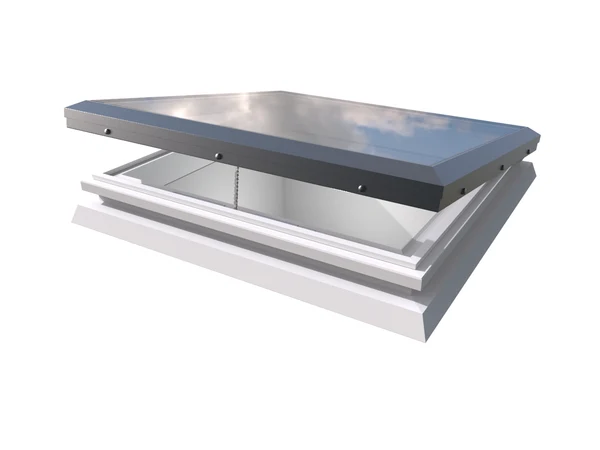
Opening rooflights provide both daylight and ventilation and can be useful for kitchens, bathrooms, offices and commercial spaces.
Walk-on rooflights are specially engineered structural products for applications where people may deliberately walk across the glazing. Standard rooflights should never be assumed to be walk-on.
Flat Rooflights for Residential Buildings
Flat rooflights are especially popular in residential extensions. A new kitchen or rear extension can sometimes create a large room with limited wall space for windows. Installing one or more rooflights can help distribute daylight across the additional floor area.
They can be used in:
Kitchen Extensions
Kitchens often benefit from additional daylight because cabinets and neighbouring properties can restrict the amount of light entering through vertical windows.
A rooflight positioned above a central kitchen island, dining area or circulation zone can create a brighter and more inviting space.
Living Rooms
A fixed flat rooflight can introduce daylight while maintaining a simple ceiling design. Larger rooflights can create a strong architectural feature, while smaller units can provide more controlled illumination.
Home Offices
Natural daylight can make a home office feel more comfortable and less dependent on artificial lighting. However, the position of the rooflight should be considered carefully to reduce glare on computer screens.
Garden Rooms
Flat rooflights can help prevent garden rooms from feeling enclosed. They can be particularly effective where the structure has limited wall glazing.
Flat Rooflights for Commercial Buildings
Commercial properties can also benefit significantly from rooflight installation.
Offices, retail units, warehouses, workshops and industrial buildings often have large roof areas where daylight can be introduced strategically.
Commercial rooflights can help improve the appearance of interior spaces while potentially reducing the requirement for electric lighting during daylight hours. They can also contribute to a more comfortable working environment.
For commercial projects, however, additional factors such as structural loading, fire performance, safety, ventilation and building regulations may need to be considered.
Choosing the Right Glazing
Glazing is one of the most important factors when you buy flat rooflights online.
Double Glazing
Double glazing provides two panes of glass separated by an insulating cavity. It can offer a good balance between thermal performance, durability and cost for many residential and commercial projects.
Triple Glazing
Triple glazing adds another pane and can provide improved thermal insulation. It may be suitable for highly insulated buildings or projects where reducing heat loss is a priority.
Solar-Control Glazing
Large rooflights can receive significant solar radiation. In warmer conditions, this can increase indoor temperatures. Solar-control glazing can help reduce unwanted solar heat gain while still allowing daylight into the building.
The appropriate specification depends on the building’s orientation, climate, size of glazing and overall design.
Frameless and Framed Rooflights
Homeowners and designers can generally choose between framed and frameless styles.
Framed flat rooflights have a visible frame around the glazing. They can provide a practical combination of structural support, weather protection and thermal performance.
Frameless rooflights have a minimalist appearance and can create a cleaner transition between the glass and surrounding roof. They are particularly popular in modern residential extensions and contemporary commercial buildings.
The choice should be based on aesthetics, budget, structural requirements and performance rather than appearance alone.
Fixed or Opening Flat Rooflights?
One of the first decisions to make is whether the rooflight needs to open.
Fixed rooflights are suitable when the primary objective is daylight. They contain fewer moving components and can be easier to maintain.
Opening rooflights are useful when ventilation is also required. They can be manually operated or electrically controlled, depending on the product.
For kitchens, bathrooms and rooms that can become warm, ventilation may be an important consideration. For living rooms, corridors and spaces with sufficient alternative ventilation, a fixed rooflight may provide everything required.
Size and Position Matter
Choosing the largest possible rooflight is not always the best approach.
A larger glazed area can provide more daylight, but it can also influence solar gain, glare, thermal performance and the visual balance of the room. Industry guidance recommends considering rooflight size alongside the rest of the building’s glazing and design.
When planning a rooflight, consider:
- Room dimensions
- Roof orientation
- Existing windows
- Ceiling height
- Furniture placement
- Solar exposure
- Desired daylight levels
- Insulation
- Potential overheating
Strategic positioning can often deliver better results than simply installing the biggest available unit.
Installation on Flat Roofs
Correct installation is essential for both residential and commercial rooflights.
Although commonly called “flat roofs,” these roofs are normally designed with a fall so rainwater can drain away. Some rooflight installations require an upstand or kerb to provide the appropriate mounting arrangement and weatherproofing.
The rooflight must be correctly integrated with:
- Roof insulation
- Waterproofing membrane
- Structural opening
- Flashing or kerbing
- Internal ceiling finish
- Drainage details
Incorrect installation can result in water leaks, condensation, air leakage and thermal bridging. A qualified installer should follow the manufacturer’s installation instructions and ensure that the rooflight is compatible with the existing roof system.
See also: How UK Businesses Can Save Money on Business Gas Contracts
Safety Considerations
Safety is particularly important when installing glazing overhead.
Industry guidance highlights the need to consider the correct specification of glass for flat rooflights, particularly in relation to impact and breakage.
For commercial properties, additional considerations may include maintenance access, fire performance and structural loading.
Standard rooflights should also not be treated as walkable surfaces. If a rooflight will form part of a roof terrace or be subject to intentional foot traffic, a purpose-designed structural walk-on system should be specified.
What to Check Before You Buy
If you plan to buy flat rooflights online, compare the following specifications before ordering:
- Overall dimensions – Confirm the product size and required structural opening.
- Roof compatibility – Check that it is designed for your flat or low-pitched roof system.
- U-value – Review the thermal performance of the complete unit.
- Glazing type – Compare double, triple and solar-control options.
- Safety specification – Ensure the glass is suitable for overhead installation.
- Fixed or opening design – Decide whether ventilation is required.
- Frame construction – Consider thermal performance, durability and appearance.
- Weatherproofing – Check how the rooflight connects to the roof membrane.
- Warranty – Review warranty terms and installation conditions.
- Installation requirements – Confirm whether professional installation is recommended or required.
For commercial applications, also check structural loading, fire requirements and other applicable regulations.
Maintaining Your Flat Rooflight
Regular maintenance can help preserve the performance and appearance of a rooflight.
Homeowners should periodically check the glazing, frame, seals and surrounding roof area for signs of damage or deterioration. Commercial building owners may require scheduled roof inspections as part of their wider facilities-management programme.
Cleaning the glazing can also help maintain daylight transmission, particularly in locations where dirt, leaves or other debris accumulate.
Any leaks, damaged seals or cracks should be investigated promptly rather than ignored.
Residential vs Commercial Flat Rooflights
Although the basic principle is the same, residential and commercial projects can have different requirements.
Residential projects often prioritise appearance, daylight, thermal efficiency and affordability. Commercial buildings may require additional attention to structural loading, fire performance, durability, ventilation and maintenance.
Glass rooflights are widely used in both domestic and commercial applications where aesthetics and performance are priorities.
Therefore, buyers should select a product according to the specific building rather than assuming that one rooflight specification will suit every project.
Conclusion
Choosing to buy flat rooflights online can make it easier to compare products for residential extensions, homes, offices, retail properties and commercial buildings. Flat rooflights offer an effective combination of natural daylight, modern design and flexible installation options.
The best product depends on the building, roof construction and intended use. Fixed rooflights can provide a simple daylight solution, while opening models can add ventilation. High-performance glazing can improve thermal efficiency, while solar-control options can help manage unwanted heat gain.
Before ordering, always check the rooflight’s dimensions, glazing, U-value, safety specifications, structural requirements, warranty and installation details. With careful product selection and professional installation, a flat rooflight can become a valuable long-term addition to both residential and commercial buildings.